
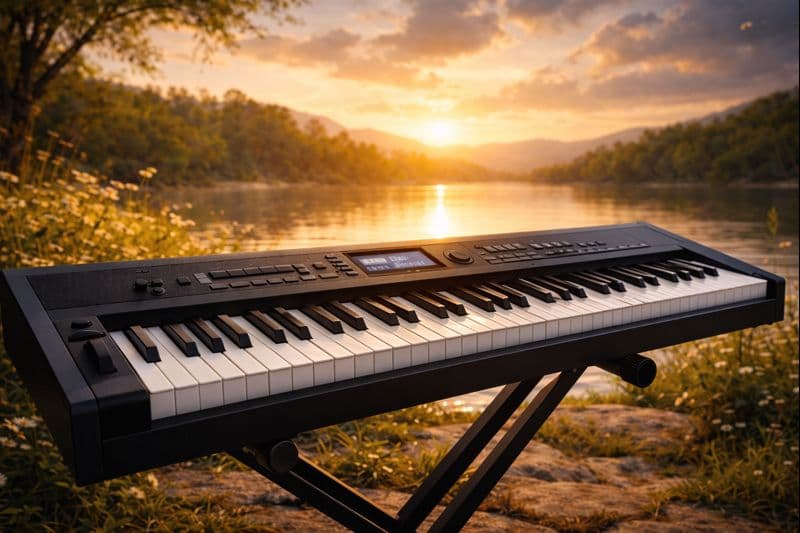
Piano/Keyboard
Technique, reading skills, and musical expression at the keys.
Overview
Piano and keyboard study develops coordination, harmony awareness, and musical reading.
Students progress through technique, rhythm, and repertoire suited to their level.
Historical & Cultural Context
The piano evolved in early modern Europe from earlier keyboard instruments.
Its dynamic range and expressive control made it central to Western art music and later popular genres.
Musical Role & Technique
Lessons focus on posture, hand shape, finger strength, and clear articulation.
Reading skills, timing, and basic harmony are reinforced alongside technique and tone control.
Learning Benefits
Keyboard study builds two-hand coordination, rhythmic precision, and harmonic awareness.
It supports ear training and a clear understanding of melody and accompaniment roles.
Contemporary Use
Piano remains central in solo, ensemble, and accompaniment roles across many genres.
Digital keyboards and synthesizers extend the instrument into modern production and live performance.
Regional Variations
Classical, jazz, and popular traditions emphasize different techniques and stylistic vocabulary.
Digital keyboards vary in action, sound engines, and performance controls.
Glossary
Octave: the interval between two notes of the same name, eight scale steps apart.
Chord: two or more notes played together to create harmony.
Articulation: how notes are attacked, sustained, and released.
Sustain pedal: a foot pedal that prolongs notes after the keys are released.
Further Reading
Metropolitan Museum of Art, Heilbrunn Timeline: The Piano.
Encyclopaedia Britannica: Piano.